Introduction
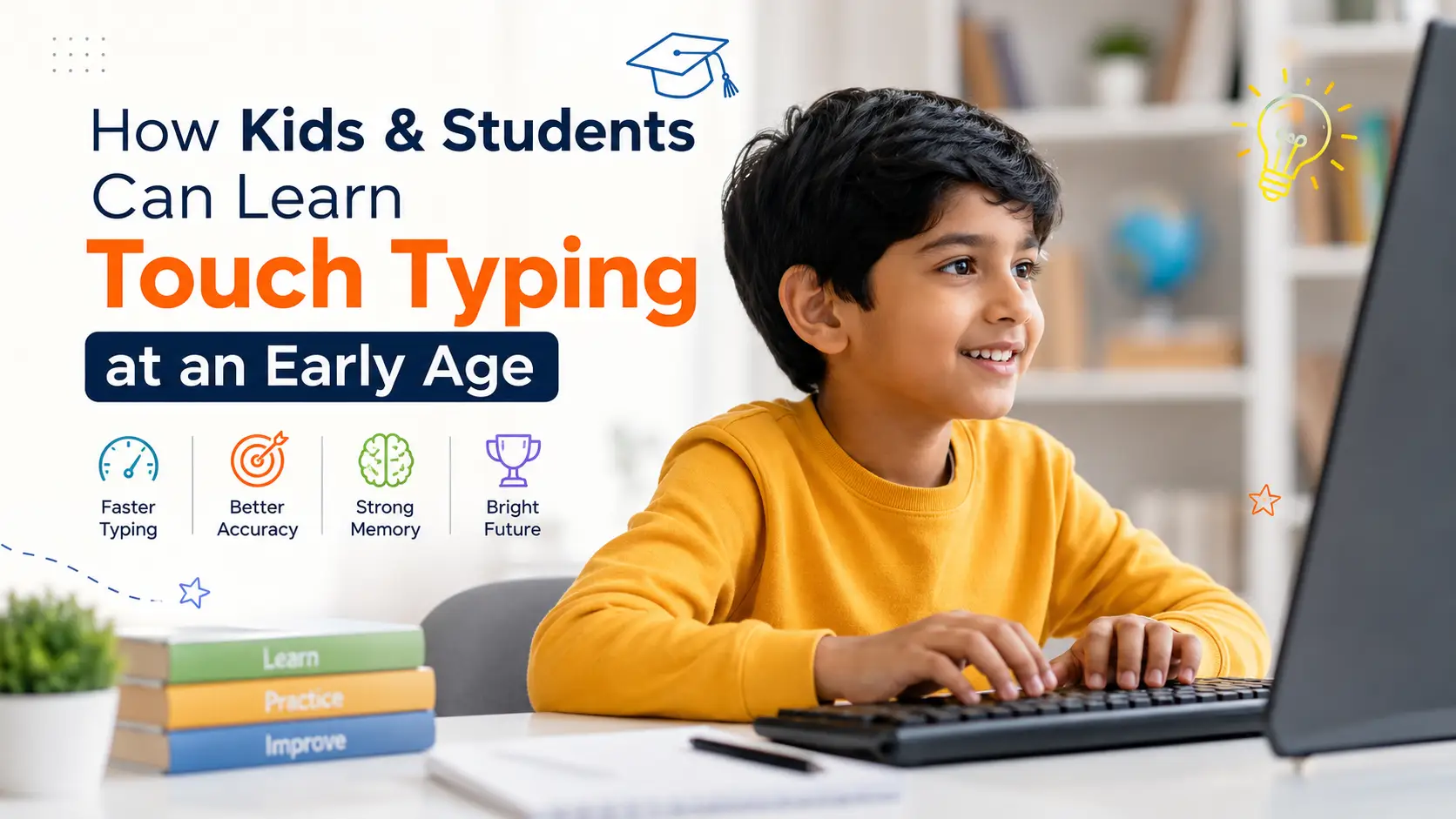
In today's digital world, children begin using computers much earlier than ever before. From attending online classes and completing school assignments to learning coding, creating presentations, and communicating through digital platforms, keyboards have become an essential part of every student's education. While many children know how to type by looking at the keyboard, very few learn the proper technique known as touch typing. This single skill can dramatically improve a child's speed, accuracy, confidence, and productivity throughout school, college, and eventually their professional career.
Touch typing is the ability to type using all ten fingers without constantly looking down at the keyboard. Instead of searching for each key individually, children gradually develop muscle memory that allows their fingers to locate every letter automatically. Once this habit is formed, typing becomes faster, smoother, and far less mentally exhausting. Rather than focusing on finding keys, students can concentrate completely on their ideas, lessons, or creative work.
Many parents believe typing is a skill that children will naturally develop as they grow older. Although regular computer use does improve familiarity with the keyboard, it often creates poor habits that become difficult to correct later. Looking down after every few words, using only two fingers, typing with awkward hand positions, or pressing incorrect keys repeatedly are common habits that reduce both speed and accuracy. Teaching touch typing at an early age helps children avoid these problems before they become permanent.
Just as children learn handwriting during their primary school years, keyboard skills have become equally important in modern education. Schools increasingly rely on digital assignments, online examinations, educational software, virtual classrooms, and project-based learning. Students who can type comfortably save valuable time, complete assignments more efficiently, and experience less frustration during computer-based activities.
The best part is that learning touch typing does not require expensive equipment or advanced technical knowledge. With consistent daily practice, fun exercises, interactive lessons, and proper finger placement, almost every child can master this valuable life skill. In this guide, we will explore why children should start learning touch typing early, the ideal age to begin, how parents and teachers can make learning enjoyable, and how this simple skill creates lifelong academic and career advantages.
Why Should Kids Learn Touch Typing at an Early Age?
Children have an incredible ability to learn new physical skills quickly. Whether it is riding a bicycle, playing a musical instrument, swimming, or writing neatly, younger minds adapt much faster than adults. Touch typing follows the same principle. Since children's brains are still developing strong motor coordination and muscle memory, they can naturally learn correct keyboard habits without feeling overwhelmed.
When students begin typing correctly from the start, every practice session strengthens healthy finger movements. Instead of searching for keys one by one, their fingers gradually remember the location of every letter, number, and punctuation mark. After enough repetition, typing becomes automatic. This process is known as muscle memory, and it allows children to type without consciously thinking about each key they press.
Learning touch typing early also reduces unnecessary stress during school work. Imagine two students writing the same essay. One student spends half of the time looking at the keyboard, correcting typing mistakes, and searching for letters. The other student types naturally while focusing entirely on ideas and sentence structure. Even if both students have the same knowledge, the second student finishes faster and with greater confidence simply because keyboard operation requires less mental effort.
Early typing education also improves concentration. Since children no longer divide their attention between the keyboard and the computer screen, they become better readers, faster writers, and more confident learners. This improved focus is especially useful when completing homework, preparing reports, writing essays, creating presentations, or taking online tests.
Another important advantage is confidence. Many children become nervous when asked to type in front of classmates because they fear making mistakes or typing too slowly. As their speed and accuracy improve through regular practice, they become much more comfortable using computers in school and at home. Increased confidence often encourages children to participate more actively in digital learning activities.
Typing is no longer limited to computer classes. Students use keyboards while learning programming, designing presentations, conducting research, writing emails, participating in coding competitions, and collaborating on online projects. Developing strong typing skills early gives children a valuable advantage across almost every subject they study.
What Is the Best Age to Start Learning Touch Typing?
Parents often wonder when children should begin learning touch typing. Although every child develops differently, most educators recommend introducing structured keyboard practice between the ages of 7 and 10 years. At this stage, children generally have enough finger coordination to use all ten fingers while still being young enough to develop excellent typing habits naturally.
Children younger than seven can still become familiar with keyboards through simple educational games and alphabet activities. However, formal touch typing lessons should remain enjoyable rather than strict. The objective during these early years is simply to help children become comfortable using a keyboard without creating pressure or frustration.
Students between the ages of eight and twelve usually experience the fastest improvement. Their reading ability, hand-eye coordination, and concentration continue developing rapidly, making this the perfect period to establish proper finger placement, posture, and keyboard awareness. Even practicing for fifteen to twenty minutes each day can produce noticeable improvement within a few weeks.
Teenagers can certainly learn touch typing successfully, but correcting years of incorrect habits often requires more patience. Students who have spent years typing with only two fingers usually need time to retrain their muscle memory. While improvement is absolutely possible, beginning earlier makes the learning process much smoother and more natural.
The ideal approach is to introduce typing gradually without making it feel like another school subject. Children learn best when lessons include games, achievements, progress tracking, and enjoyable challenges instead of long repetitive drills. Small daily improvements build lasting confidence and encourage consistent practice over time.
Parents should remember that progress varies from child to child. Some students naturally develop speed very quickly, while others require additional time to build accuracy first. Comparing children with one another is rarely helpful. Instead, celebrating individual progress keeps motivation high and encourages a positive attitude toward learning.
How Touch Typing Improves Academic Performance
Strong typing skills benefit far more than computer classes. Almost every school subject now involves digital work in some form. Students prepare assignments using word processors, complete online quizzes, create presentations, perform internet research, and collaborate on classroom projects. Faster typing allows them to complete these activities more efficiently while spending more time thinking critically instead of searching for keys.
During examinations that require typing, every minute matters. Students with higher typing speed can write longer answers, review their work carefully, and correct mistakes before submitting. Those who struggle with keyboard skills often spend valuable time locating letters instead of expressing their knowledge effectively.
Typing also encourages better writing habits. When children can type comfortably, they are more willing to revise paragraphs, reorganize ideas, fix grammar mistakes, and expand their thoughts. Editing digital documents becomes much easier than rewriting entire pages by hand, allowing students to focus on producing higher-quality work.
As education becomes increasingly digital, touch typing transforms from a useful skill into an essential academic advantage. Students who develop this ability early often experience smoother learning throughout school, higher confidence during computer-based tasks, and greater readiness for future educational opportunities.
Why Schools Should Teach Touch Typing
Technology has become an essential part of modern education. From primary school to university, students regularly use computers for assignments, online assessments, presentations, research projects, coding activities, and collaborative learning. Despite this growing dependence on digital devices, many schools still assume that students will naturally learn keyboard skills on their own. Unfortunately, this assumption often results in poor typing habits that remain with students for years.
Teaching touch typing as part of the school curriculum provides every student with an equal opportunity to develop an important life skill. Instead of spending years typing inefficiently with two fingers, children can learn the correct finger positions, proper posture, and keyboard techniques from the beginning. Once these habits become automatic, students can focus entirely on learning instead of struggling with the keyboard.
Touch typing lessons do not require long classroom sessions. Even fifteen to twenty minutes of guided practice a few times each week can produce significant improvements over an academic year. Schools can introduce typing games, classroom challenges, speed competitions, and progress tracking to keep students engaged while steadily improving their keyboard skills.
Students who type confidently are also better prepared for computer-based examinations, digital literacy programs, STEM education, coding classes, and future workplace requirements. As education continues moving toward digital platforms, touch typing should be viewed as a foundational skill similar to reading, handwriting, and mathematics.
How Parents Can Help Children Learn Faster
Parents play one of the most important roles in helping children develop good typing habits. Creating a positive learning environment at home often has a greater impact than long hours of practice. Children enjoy learning when parents encourage progress instead of focusing only on speed or mistakes.
The first step is creating a comfortable study space. A properly adjusted chair, correct screen height, and a suitable keyboard help children maintain healthy posture while typing. Their feet should comfortably touch the floor, their wrists should remain relaxed, and the monitor should be positioned at eye level to reduce neck strain.
Parents should also encourage children to look at the screen instead of constantly watching the keyboard. At first this may feel difficult, but over time it helps develop the muscle memory required for touch typing. Gentle reminders are much more effective than frequent criticism.
Consistency is more valuable than long practice sessions. Fifteen minutes of daily practice is usually far more effective than two hours of typing once every weekend. Short, enjoyable sessions help children remain motivated while gradually improving both speed and accuracy.
Celebrating small achievements also makes a big difference. Whether a child improves typing accuracy, increases their words per minute, or completes a new lesson, recognizing that progress builds confidence and encourages continued learning.
Fun Ways to Make Touch Typing Interesting for Kids
Children learn best when education feels like play rather than work. Traditional typing drills can quickly become repetitive, especially for younger learners. Adding games, challenges, rewards, and creative activities transforms typing practice into an enjoyable experience that children actually look forward to each day.
Typing games are one of the easiest ways to maintain motivation. Interactive lessons that reward accuracy, unlock new levels, award stars, or display achievement badges keep students engaged while quietly strengthening their typing skills. Friendly competition between siblings or classmates can also increase enthusiasm without creating unnecessary pressure.
Parents and teachers can create small weekly challenges such as improving typing accuracy by five percent, completing a lesson without mistakes, or increasing typing speed by a few words per minute. Achievable goals encourage steady progress while preventing frustration.
Creative writing activities also make typing practice meaningful. Children can write short stories, daily journals, poems, letters, or simple essays instead of repeating random words. Typing becomes much more enjoyable when they use it to express their own ideas and imagination.
Another excellent approach is allowing children to practice while learning topics they already enjoy. They might type animal facts, space information, sports news, science experiments, or favorite movie reviews. Combining typing practice with personal interests keeps motivation naturally high.
Common Mistakes Children Should Avoid
Many beginners unintentionally develop habits that slow their progress. Fortunately, these mistakes can be corrected early before they become permanent.
1. Looking at the Keyboard Constantly
This is the most common mistake among beginners. Although looking down may seem easier at first, it prevents the brain from building muscle memory. Students should gradually train themselves to keep their eyes on the screen while allowing their fingers to locate the keys naturally.
2. Using Only Two Fingers
Many children type using only their index fingers because it feels comfortable initially. However, this technique limits typing speed and increases fatigue. Learning to use all ten fingers distributes the workload evenly and creates a much smoother typing rhythm.
3. Ignoring Accuracy
Some students become obsessed with typing faster and ignore mistakes. This creates poor habits that are difficult to correct later. Accuracy should always come before speed because consistent, accurate typing naturally becomes faster with regular practice.
4. Poor Sitting Posture
Slouching, bending the wrists, or sitting too close to the keyboard may cause discomfort during long typing sessions. Maintaining proper posture helps children type comfortably while reducing unnecessary strain on their hands, shoulders, and back.
5. Practicing Inconsistently
Skipping practice for long periods slows improvement considerably. Developing typing skills is similar to learning a musical instrument or playing a sport. Regular short practice sessions produce much better long-term results than occasional long sessions.
Build a Daily Typing Habit
The secret to mastering touch typing is not extraordinary talent but consistent practice. Students do not need to spend hours every day at the keyboard. A simple daily routine of fifteen to twenty minutes is enough to produce remarkable improvement over several months.
A balanced practice schedule might include five minutes of finger placement exercises, five minutes of typing lessons, five minutes of speed practice, and a few minutes of writing meaningful paragraphs. This variety keeps children interested while strengthening different typing skills simultaneously.
Parents should remember that every child progresses at a different pace. Some students improve rapidly, while others require additional time to build confidence and muscle memory. The goal should never be competing with others but becoming a little better each day.
As technology continues shaping education and future careers, touch typing is becoming one of the most valuable digital skills a child can possess. Starting early, practicing consistently, and maintaining the correct techniques will provide benefits that extend far beyond the classroom and continue throughout higher education and professional life.
How Touch Typing Prepares Students for the Future
Touch typing is much more than a classroom skill. It prepares children for a future where computers, digital communication, and technology play a central role in almost every profession. Whether a student dreams of becoming a doctor, engineer, teacher, designer, software developer, journalist, accountant, scientist, entrepreneur, or government officer, keyboard skills will remain an essential part of daily work.
Most modern careers require professionals to write reports, send emails, prepare presentations, analyze data, complete online forms, communicate with colleagues, or work with digital documents. People who type efficiently complete these tasks faster while making fewer mistakes. Over time, this increased productivity saves hundreds of hours every year.
Students who begin touch typing at an early age enter college with a significant advantage. Instead of struggling with assignments, research papers, programming projects, and online examinations, they can concentrate entirely on understanding concepts and expressing ideas. Their keyboard becomes a natural extension of their thinking process.
The importance of typing skills will continue growing as artificial intelligence, cloud computing, online education, remote work, and digital collaboration become increasingly common. Investing time in touch typing today prepares children for opportunities that may not even exist yet.
Benefits of Touch Typing for Different Subjects
Touch typing supports learning across almost every school subject. Rather than benefiting only computer classes, it improves the overall educational experience by helping students complete digital work more efficiently.
English and Language Studies
Students can write essays, stories, poems, reports, and grammar exercises much more comfortably. Faster typing encourages them to revise, edit, and improve their writing instead of avoiding corrections because rewriting takes too much time.
Science
Science projects often require research, observations, practical reports, presentations, and data collection. Good typing skills allow students to organize information clearly and complete assignments more efficiently.
Mathematics
Although mathematics focuses on numbers, students frequently prepare digital notes, presentations, spreadsheets, and project reports. Comfortable keyboard skills help them work confidently with educational software and online learning platforms.
Computer Science
Programming requires constant keyboard usage. Students learning coding benefit enormously from touch typing because they can write code faster, correct syntax errors more efficiently, and maintain better concentration while solving logical problems.
Social Studies and Research
Research-based subjects involve collecting information, preparing reports, citing references, and creating presentations. Students who type confidently spend less time entering text and more time analyzing information.
How TypeNest Makes Learning Easy for Kids
Learning touch typing becomes much more enjoyable when lessons are interactive, structured, and rewarding. Instead of memorizing random keyboard positions, children learn step by step while gradually developing confidence and muscle memory.
TypeNest is designed with beginners in mind. Students start with the Home Row keys before progressing to the Top Row, Bottom Row, words, numbers, and advanced lessons. This gradual approach prevents frustration and allows children to master one skill before moving to the next.
Interactive typing practice, progress tracking, accuracy measurement, typing speed tests, and structured lessons help students clearly understand their improvement. Seeing measurable progress encourages children to continue practicing every day.
The platform also supports self-paced learning. Every child learns differently, and TypeNest allows students to progress according to their own comfort level instead of comparing themselves with others.
Parents and teachers can use TypeNest as a regular learning companion by encouraging children to complete a few lessons each day. Small daily improvements eventually become remarkable long-term results.
Simple Daily Practice Plan for Students
Children do not need long study sessions to become excellent typists. A consistent daily routine is usually the most effective approach.
- 5 Minutes: Practice proper finger placement and Home Row keys.
- 5 Minutes: Complete one structured touch typing lesson.
- 5 Minutes: Take a short typing speed or accuracy test.
- 5 Minutes: Type a paragraph, short story, journal entry, or school notes.
Following this simple twenty-minute routine five or six days each week can significantly improve typing speed and accuracy within a few months. More importantly, it develops lifelong keyboard habits that remain useful throughout education and professional life.
Frequently Asked Questions (FAQs)
Can children really learn touch typing?
Yes. Children usually learn touch typing faster than adults because their brains develop muscle memory more quickly. Starting early often leads to stronger long-term typing habits.
How long does it take to learn touch typing?
With regular practice of fifteen to twenty minutes per day, many beginners notice visible improvements within four to eight weeks. Mastering touch typing may take several months depending on consistency and practice quality.
Should children focus on speed first?
No. Accuracy should always come before speed. Once children consistently press the correct keys using proper finger placement, typing speed naturally increases through regular practice.
Is touch typing useful even if children use tablets?
Absolutely. Tablets are useful for casual tasks, but computers and keyboards remain essential for education, coding, examinations, office work, professional writing, and most future careers.
Can parents learn together with their children?
Yes. Learning together often makes practice more enjoyable and motivating. Parents who practice alongside their children also develop better keyboard skills while encouraging consistent daily learning.
Conclusion
Touch typing is one of the most valuable digital skills children can develop during their school years. It improves typing speed, increases accuracy, strengthens concentration, builds confidence, and prepares students for a technology-driven future. Unlike many subjects that may only be useful during school, touch typing remains valuable throughout college, higher education, professional careers, and everyday digital communication.
The earlier children begin learning, the easier it becomes to build correct keyboard habits and lasting muscle memory. Short daily practice sessions, engaging lessons, supportive parents, encouraging teachers, and structured learning platforms make the journey enjoyable instead of stressful.
Every assignment completed, every report written, every presentation prepared, every coding project developed, and every online examination taken becomes easier when students can type comfortably without looking at the keyboard. This simple ability saves time, reduces frustration, and allows learners to focus entirely on their ideas instead of searching for keys.
If your child is just beginning their digital learning journey, today is the perfect time to introduce touch typing. With patience, consistency, and the right practice methods, this single skill can create lifelong academic advantages and open countless opportunities in the digital world. Start practicing with TypeNest today and help young learners build a faster, smarter, and more confident future.
Continue Learning
Learning touch typing at an early age gives students a strong academic advantage, but mastering keyboard skills requires regular practice and the right learning resources. Explore these beginner-friendly guides to improve your typing speed, accuracy, and overall computer skills.
- Complete Beginner's Guide to Touch Typing
- Complete Typing Accuracy Guide
- Complete Guide to Increase Typing Speed
- Typing Speed Test: Everything You Need to Know
- Common Typing Mistakes and How to Fix Them
Start Your Child's Touch Typing Journey with TypeNest
Whether your child is just beginning to use a computer or already spends time studying online, learning touch typing is one of the most valuable digital skills they can develop. TypeNest offers structured typing lessons, engaging practice sessions, interactive typing tests, and easy-to-follow learning guides designed for beginners of all ages.
Just 15 to 20 minutes of daily typing practice can significantly improve typing speed, accuracy, confidence, and overall computer proficiency. Start learning today and build a skill that will support academic success, competitive exams, higher education, and future careers.
Last Updated: July 2026
Author: TypeNest Editorial Team